
While both use a rotating disc for flow control, the valve is generally used for controlling air or gas flow in HVAC or industrial exhaust systems, while a Butterfly valve is typically used in pipelines to control the flow of liquids or gases.
Industrial Butterfly Damper Manufacturer in India
Swift, reliable airflow control with a compact, versatile design.
Freture Techno manufactures industrial butterfly dampers for precise air and gas flow control in HVAC, power generation, petrochemical, exhaust and process applications. Available in manual, electric and pneumatic configurations, our butterfly dampers can be supplied in round, square and rectangular configurations with sizes from 6 to 144 inches.
What Is a Butterfly Damper ?
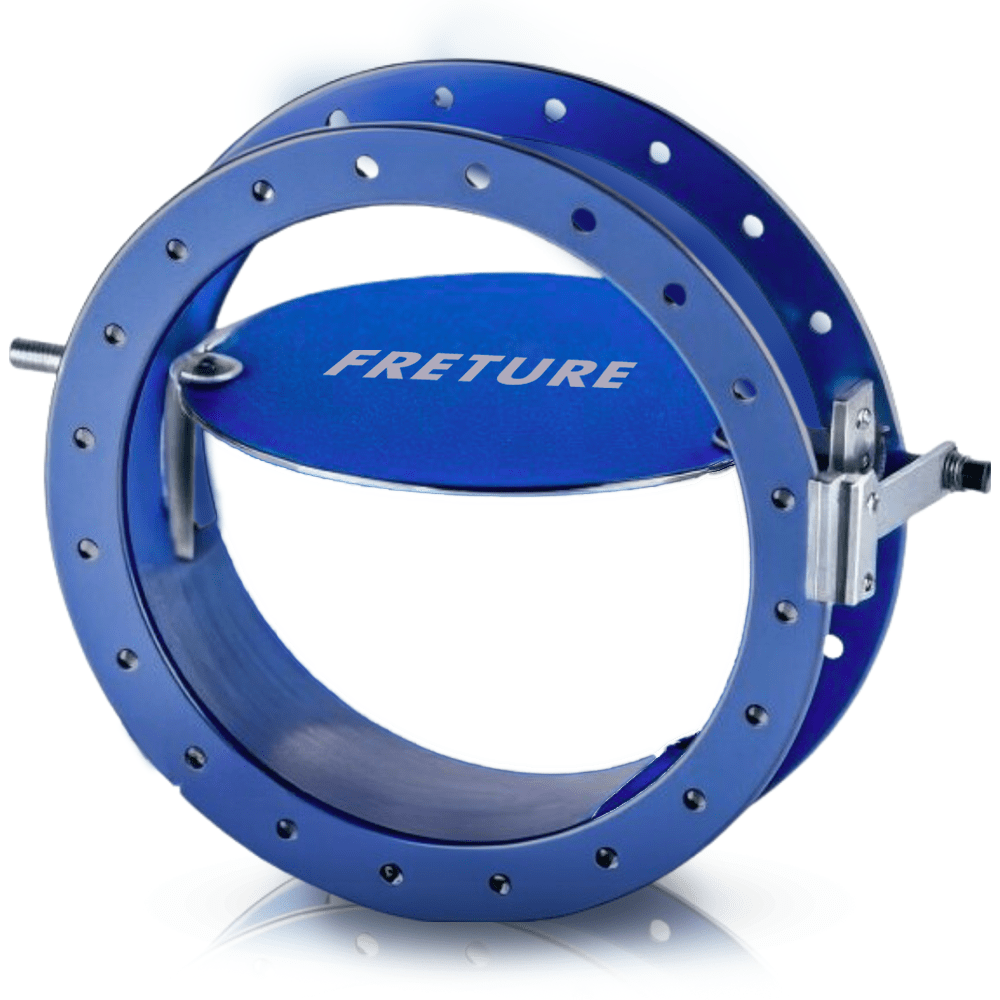
A butterfly damper is a rotary airflow control device that uses a circular disc mounted on a rotating shaft to regulate, modulate or isolate the flow of air and gases in ducts and industrial process systems. By rotating the disc, the damper can provide open/closed operation or intermediate positioning for airflow control.
Butterfly Damper Working Principle
Competitor pages are explicitly targeting this topic. For example, current search results contain dedicated explanations covering disc rotation, open position, closed position and intermediate modulation.
Butterfly Damper Working Principle
- Fully open position - disc is aligned with airflow.
- Partially open position — disc rotates to restrict airflow.
- Modulating position — actuator adjusts disc angle according to control requirements.
- Closed position — disc moves across the airflow path to isolate the duct.
- Actuation — manual, electric or pneumatic operation rotates the shaft
Butterfly Damper Types
It suits diverse industrial requirements. Each type is designed with a specific function in mind to meet the unique demands of various systems:
Motorised: Equipped with electric or pneumatic actuators, Butterfly Damper valves offer automated control of airflow, which is essential for operations needing precise modulation and remote control capabilities.
Manual: Designed for simpler applications, manual Butterfly Damper valves allow users to adjust airflow by hand. These are ideal for setups where frequent adjustments are unnecessary or where power isn’t available.
MS (Mild Steel) and SS (Stainless Steel): Made from mild steel or stainless steel, these dampers cater to different levels of durability and environmental resistance. Stainless steel dampers are highly resistant to corrosion, making them suitable for humid or corrosive environments. Each of these options provides unique advantages, ensuring that Butterfly Damper Valves deliver optimal performance under a variety of industrial conditions.
Why Choose Freture Techno Butterfly Dampers?
Freture Techno manufactures industrial butterfly dampers in round, square and rectangular configurations for air and gas handling applications. Depending on process requirements, the dampers can be supplied with manual, electric or pneumatic actuation, stainless steel or carbon steel construction, and tadpole, metal-seat or swing-through sealing arrangements. Available sizes range from 6 to 144 inches, with designs for process temperatures up to 2200°F and applications requiring up to 99% shutoff.
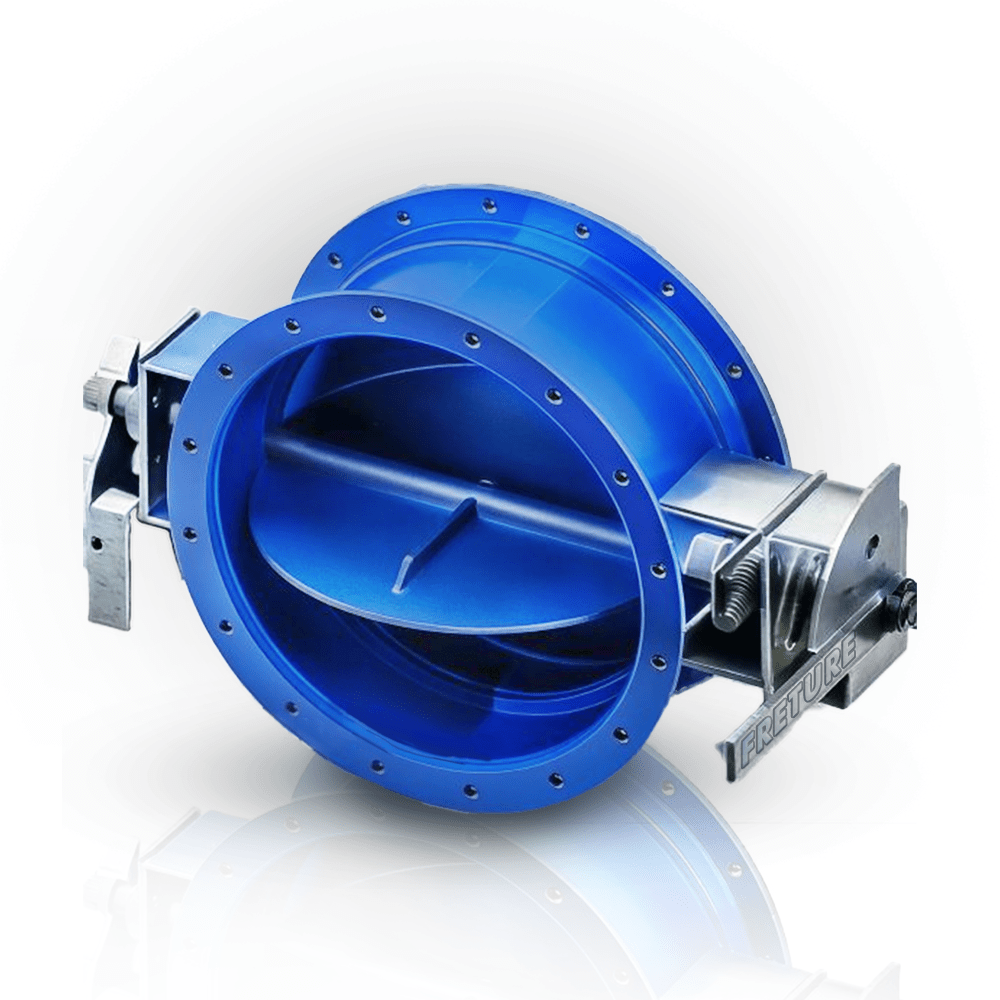
Specifications | Features |
|---|---|
Type: Butterfly Sizes: 6" to 144" Process Temperature: Up to 2200˚F Configurations: Round, Square, Rectangular Construction: Stainless Steel, Carbon Steel (Other materials available) Shutoff: Up to 99% Seal Options: Tadpole, Metal Seat, Swing-Thru Actuation: Manual, Electric, Pneumatic (Failsafe available) Modulation: Open/Closed or Modulating Pressure Rating: Up to 1 PSI & 4000 FPM process air (Higher available) Bearings: Ball Bearings & Shaft Packing Glands Standard High-Temp Bearings: Carbon Sleeve Bearings (Standard over 400˚F)
|
|
FAQ’s
Have a question before you buy our products? Take a look at the FAQs below.
If you don’t find the answer you’re looking for, get in touch with us here.
- How does Butterfly Damper Valve differ from a standard Butterfly Valve?
- What are the main applications for these valves?
They are commonly used in HVAC systems, industrial ventilation, dust collection, exhaust systems, and environmental control systems, where precise airflow regulation is needed.
- What materials are used to make these valves?
These valves are usually made from materials like stainless steel, mild steel, or other corrosion-resistant alloys, depending on the operating environment and the nature of the gases or air they control.
- Are these valves suitable for high-temperature environments?
Yes, certain they are designed with heat-resistant materials or coatings, making them suitable for high-temperature applications in exhaust or combustion systems
- What types of actuators are used with these valves?
The valves can be operated manually, or equipped with pneumatic, electric, or hydraulic actuators for automated control. The choice of actuator depends on the level of control required and the system design.
- How do motorised valves work?
Motorised Butterfly Damper valves use an electric motor to control the rotation of the valve disc, allowing for precise and automated flow adjustment, which is ideal for remote or complex control systems.
- What is the purpose of a Pneumatic Butterfly Damper valve?
The valve uses air pressure to operate the disc, providing reliable, fast actuation. These are often used in industrial applications where rapid or frequent adjustment is required.
- How do I select the right size for these valves?
The correct size is determined by the system's duct diameter, flow requirements, and pressure conditions. Consulting with a manufacturer or technical expert can help ensure accurate sizing.
- What maintenance is needed for these valves?
Regular maintenance includes inspecting the valve disc, seals, and actuator for wear or damage, ensuring the valve is properly lubricated, and periodically testing for consistent operation to maintain optimal performance and longevity.
Industries where this is Used
Power Generation
HVAC Industry
Oil and Gas Industry
Wastewater Treatment
Petrochemical Industry
Applications
- Cooling Tower Airflow Management – Controls airflow to optimize cooling efficiency.
- Selective Catalytic Reduction (SCR) Systems – Controls NOx emissions in power plants.
- Carbon Capture & Storage (CCS) – Helps control flue gas in CO₂ capture processes.
- Pipeline Pressure Regulation – Maintains stable pressure in gas pipelines.
- Air Pollution Control – Directs exhaust gases through scrubbers or filters.
- Corrosive Gas Handling – Handles aggressive chemical vapors safely.
- Variable Air Volume (VAV) Systems – Ensures dynamic air distribution for efficiency.
Get in Touch
You will find yourself working in a true partnership that results in an incredible experience, and an end product that is the best.