
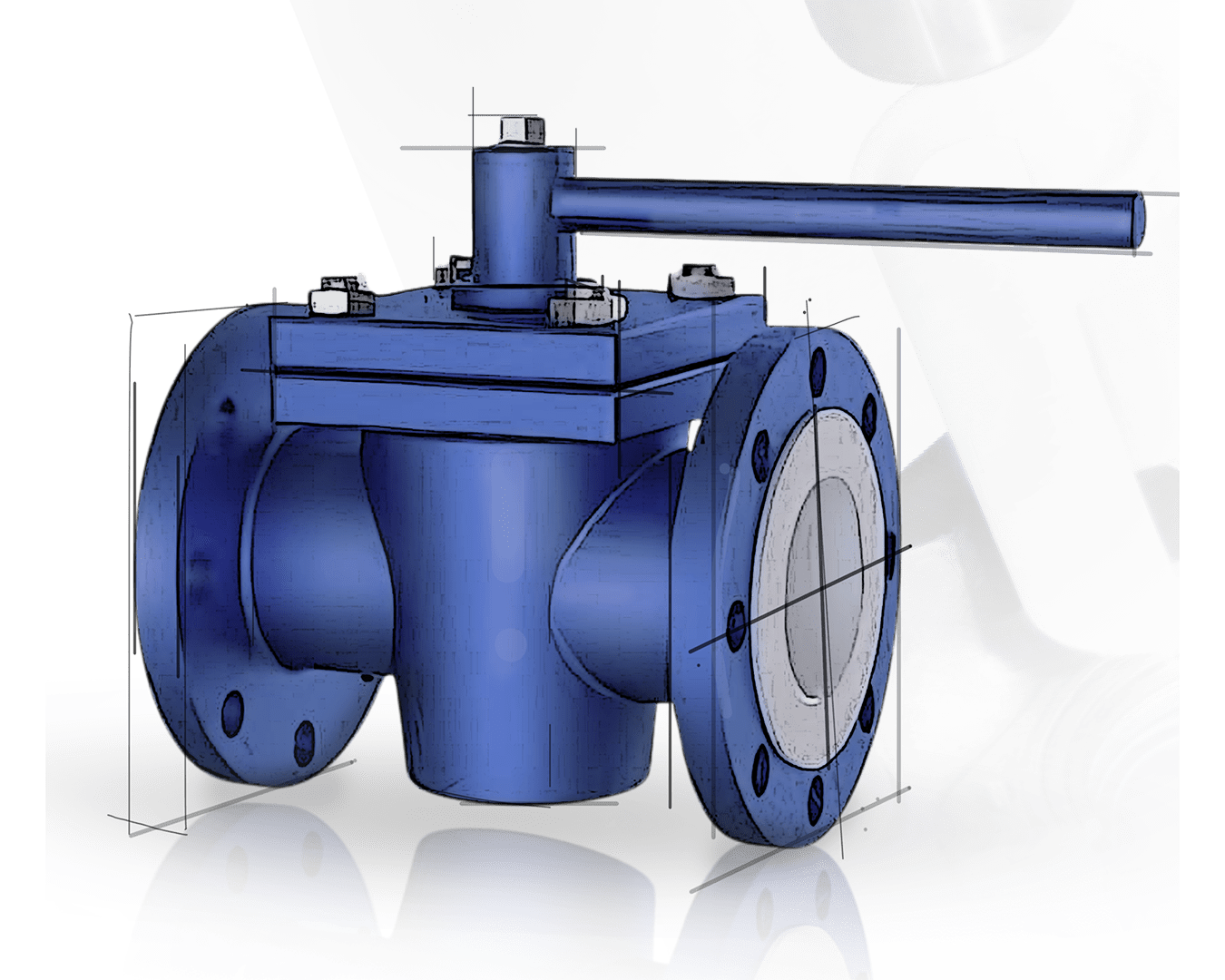
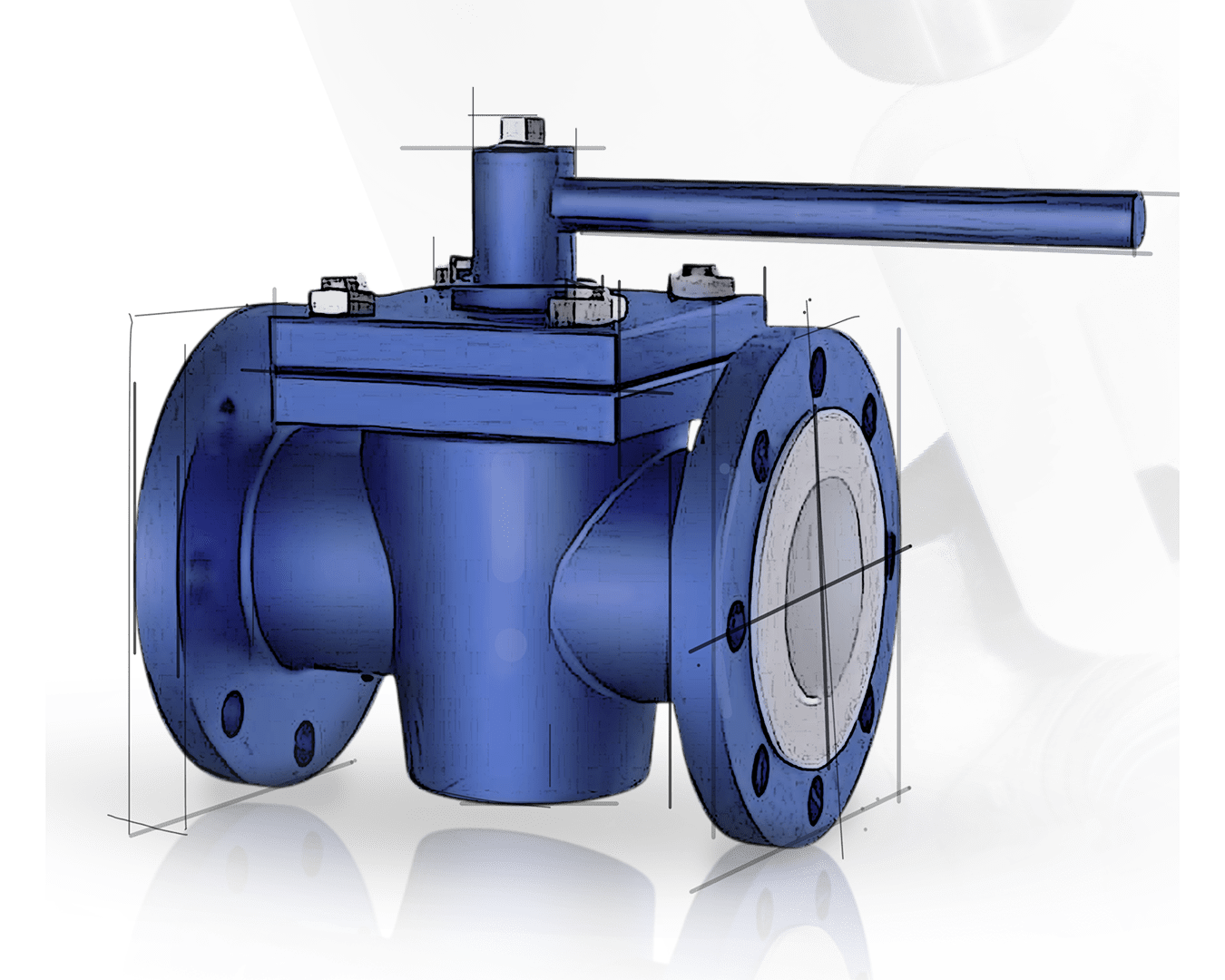
A PTFE plug valve is a quarter-turn rotary valve with PTFE-lined wetted surfaces, designed for flow isolation or control of compatible liquids and gases, particularly in corrosive chemical applications.
PTFE Plug Valve Manufacturers in India
Freture Techno is a PTFE Plug Valve manufacturer in India supplying PTFE lined plug valves for corrosive chemical, pharmaceutical, water treatment, petrochemical and other industrial process applications. A PTFE plug valve combines a robust valve body with a chemically resistant PTFE lining on the wetted surfaces. Its quarter-turn plug mechanism provides quick operation and reliable flow isolation for compatible process media.
The valves can be supplied in different sizes, pressure ratings, lining materials, body materials and operating configurations according to the application. Manual, pneumatic and electric operation options are available for suitable process requirements.
What is a PTFE Plug Valve?
A PTFE plug valve is a quarter-turn rotary valve used to start, stop or isolate the flow of compatible liquids and gases in industrial pipelines. The valve contains a cylindrical or tapered plug with a flow passage. Rotating the plug aligns or blocks the passage to control the movement of the process medium.
The wetted surfaces are protected by a PTFE lining, providing resistance to many corrosive chemicals and reducing direct contact between the process fluid and the metal valve body.
PTFE plug valves are commonly known as PTFE lined plug valves or Teflon lined plug valves and are widely considered for chemical and process applications where corrosion resistance is important.
How Does a PTFE Plug Valve Work?
The valve working principle is based on quarter-turn rotation.
When the plug's flow passage is aligned with the pipeline, the valve is open and the process medium can pass through. When the plug is rotated approximately 90 degrees, the solid section of the plug blocks the flow passage and the valve moves to the closed position.
The PTFE lining protects the wetted areas from the process medium. This construction is particularly useful for compatible corrosive fluids. For automated systems, the plug valve can be equipped with pneumatic or electric actuation for remote operation and process control.
PTFE Plug Valve Construction
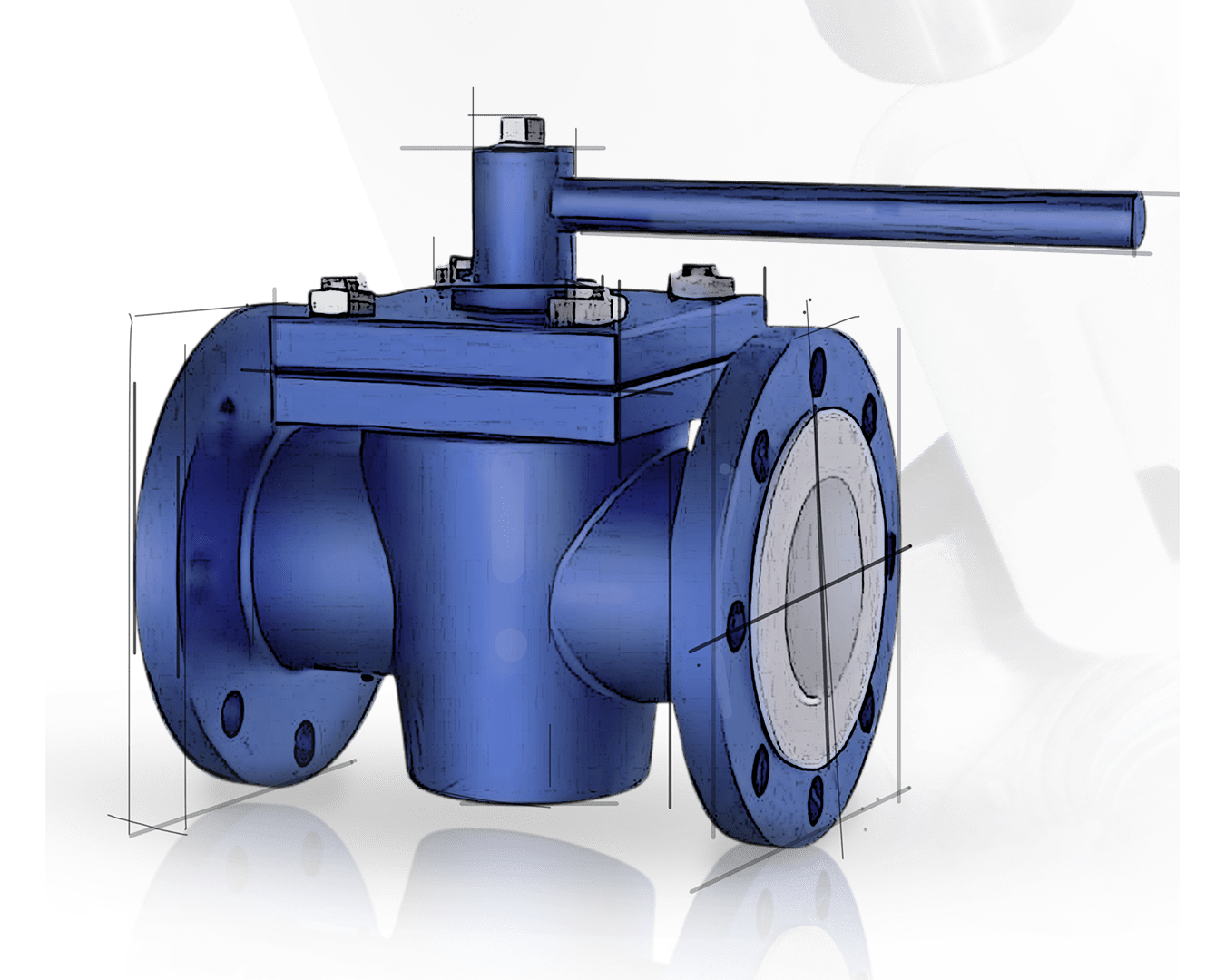
A typical PTFE lined plug valve consists of:Valve body PTFE lined internal surfaces PTFE/PFA or application-specific lined plug Stem Sealing components Gland arrangement End connections Operating lever, gearbox or actuator
The body material and lining configuration should be selected according to pressure, temperature, chemical compatibility and mechanical requirements.
PTFE Lining and Chemical Resistance
The main advantage of a these valve is the chemical resistance provided by the fluoropolymer lining.
PTFE is resistant to many acids, alkalis, solvents and aggressive process chemicals. However, chemical compatibility depends on the actual process conditions. Chemical type, concentration, temperature, pressure and exposure conditions should therefore be reviewed before selecting the valve.
For applications requiring other fluoropolymers, suitable lining materials may include PFA, FEP, PVDF or other application-specific materials.
PTFE Plug Valve Manufacturer in India
Freture Techno supplies PTFE plug valves in India for industrial applications requiring corrosion-resistant flow isolation.
Our valve selection can be based on the process medium, pressure, temperature, pipeline size, lining requirement and operating configuration. Application-specific requirements should be discussed before finalizing the valve design.
Specifications | Features |
|---|---|
Type: PTFE / PFA Lined Plug Valve Design Standard: API 599, BS 5158, API 593, ASME B16.34 Body / Plug M.O.C.: Steel Fabrication (ASTM A234 Gr. WPB), Ductile Iron (GGG40.3 / ASTM A395), Cast Steel (ASTM A216 Gr. WCB), Stainless Steel (ASTM A312 TP304 / 316, SCH.-40) Size Range: 15 mm to 200 mm Nominal Pressure: P10/PN16, #150 Working Temperature: -29°C to 210°C Face to Face: ANSI B16.10 Lining Thickness: 3 to 5 mm Lining Material: PFA (ASTM D 3307), FEP (ASTM D 2116), PVDF (ASTM D 3322), PP (ASTM D 4101) Seat Material: EPDM, PTFE, NBR, Viton Coefficient Of Friction : 0.05 to 0.10 Leakage Class: ANSI/FCI 70-2 Class IV Actuator Type: Pneumatic, Scotch Yoke, Rack & Pinion Accessories: Positioners, Limit Switches, Handwheels Certifications: CE, ATEX, SIL, ISO 9001, PED Spark Test: 15 K.V.D.C Conductivity: 0.20 to 0.6 W/mK Operation Options: Manual, Pneumatic, Electric |
|
Related Products
FAQ’s
Have a question before you buy our products? Take a look at the FAQs below.
If you don’t find the answer you’re looking for, get in touch with us here.
- What is a PTFE plug valve?
- What is a PTFE lined plug valve used for?
PTFE lined plug valves are commonly used for compatible corrosive chemical, pharmaceutical, fertilizer, petrochemical and water-treatment applications.
- Is PTFE suitable for corrosive chemicals?
PTFE provides resistance to many corrosive chemicals, but compatibility must be verified for the specific chemical, concentration, temperature and operating conditions.
- What is the difference between PTFE and PFA lined plug valves?
Both are fluoropolymer-lined valve options, but their material characteristics and application suitability differ. The lining should be selected according to the chemical, temperature and mechanical requirements of the process.
- Are PTFE plug valves available with actuators?
Yes. Depending on the valve design and application, PTFE plug valves can be supplied with manual, pneumatic or electric operation.
- How do I select a PTFE plug valve?
Selection should consider the process medium, concentration, temperature, pressure, valve size, lining compatibility, connection type and operating method.
- What industries use PTFE plug valves?
Common industries include chemical processing, pharmaceuticals, fertilizer, petrochemicals, water treatment and industrial chemical handling.
Industries where PTFE / PFA Lined Plug Valve is Used
Food And Beverages
Oil Refineries
Wastewater Treatment
Pharmaceutical Industry
Chemical Manufacturing
Application
- Corrosive Chemical Handling: Managing the flow of aggressive chemicals, ensuring safe and efficient processing.
- High-Purity Fluid Control: Maintaining the purity of sensitive fluids by preventing contamination during transfer.
- Treatment Chemical Regulation: Controlling the dosage and flow of chemicals used in various treatment processes.
- Aggressive Agent Management: Handling the flow of strong agents used in various industrial processes.
- Abrasive Slurry Control: Regulating the movement of abrasive mixtures in processing operations.
- Ultra-Pure Chemical Handling: Controlling the flow of ultra-pure and corrosive chemicals in specialized manufacturing processes.
Get in Touch
You will find yourself working in a true partnership that results in an incredible experience, and an end product that is the best.